 Wildlife
of Sumatra
Asian Palm Civet
Civets, Linsangs & Mongooses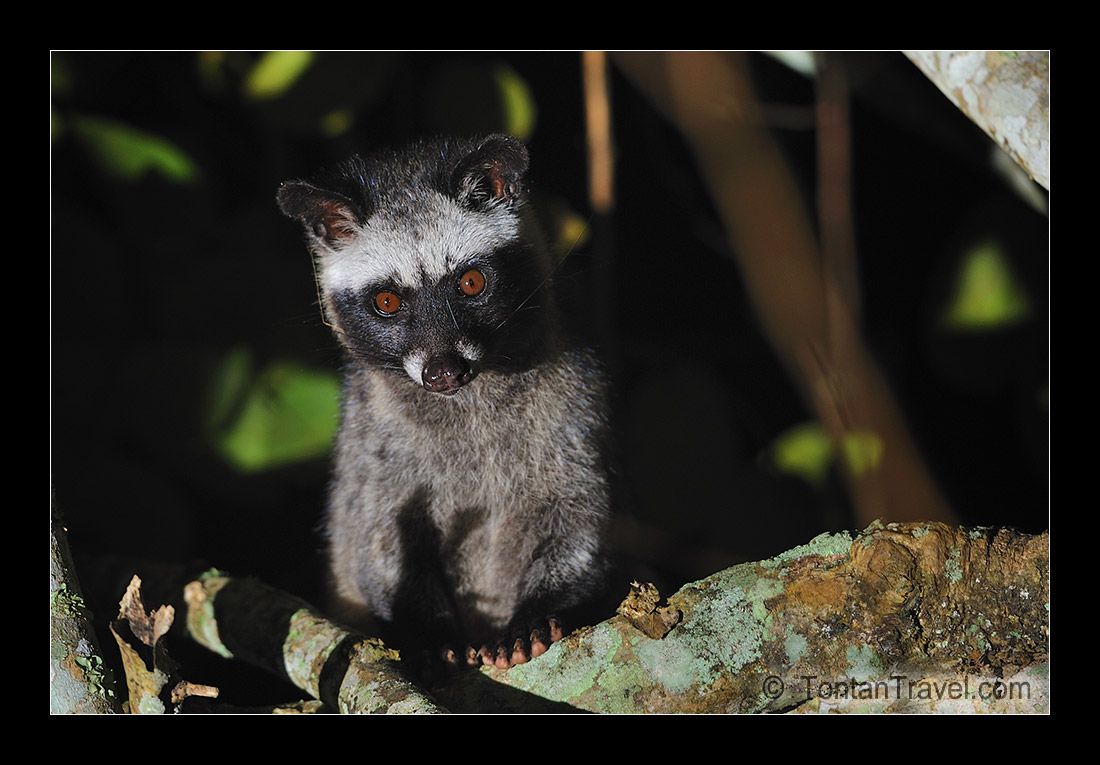
Photo: tontantravel · CC BY-SA 2.0 (May be cropped or resized)
Paradoxurus hermaphroditus
Basic stats
Diet
Mostly fruit (figs, palms, mangoes, bananas, papayas); also rodents, birds, insects, reptiles and eggs
Range
South and Southeast Asia
Litter size
2–5
Gestation period
About 60 days
Size
Body 43–71cm; tail about 48cm
Weight
1.3–5kg
The Asian palm civet, also called the common palm civet, toddy cat or musang, has a short, coarse black or grey coat with black-tipped guard hairs, dark stripes down the back and three rows of black spots along each side. The face is banded with white patches, and the tail is black-tipped without rings. Body length is 43 to 71 cm, the tail about 48 cm, and weight 1.3 to 5 kg (Animal Diversity Web; Wikipedia, general species account).
It is nocturnal, arboreal and solitary, and eats mostly fruit, including figs, palm fruit, mangoes and bananas, plus rats, birds, insects, reptiles and eggs. Gestation is about 60 days, with litters of two to five. It accommodates a broad range of habitats, and poaching for the illegal wildlife trade is a threat (Animal Diversity Web; Wikipedia, general species account).
Quick answers
- What does the Asian Palm Civet eat?
- Mostly fruit (figs, palms, mangoes, bananas, papayas); also rodents, birds, insects, reptiles and eggs
- Where is the Asian Palm Civet found?
- South and Southeast Asia
- What is the litter size of the Asian Palm Civet?
- 2–5
- How long is the gestation period of the Asian Palm Civet?
- About 60 days
- How big is the Asian Palm Civet?
- Body 43–71cm; tail about 48cm
- How much does the Asian Palm Civet weigh?
- 1.3–5kg