 Wildlife
of Sumatra
Mountain Imperial Pigeon
Pigeons and Doves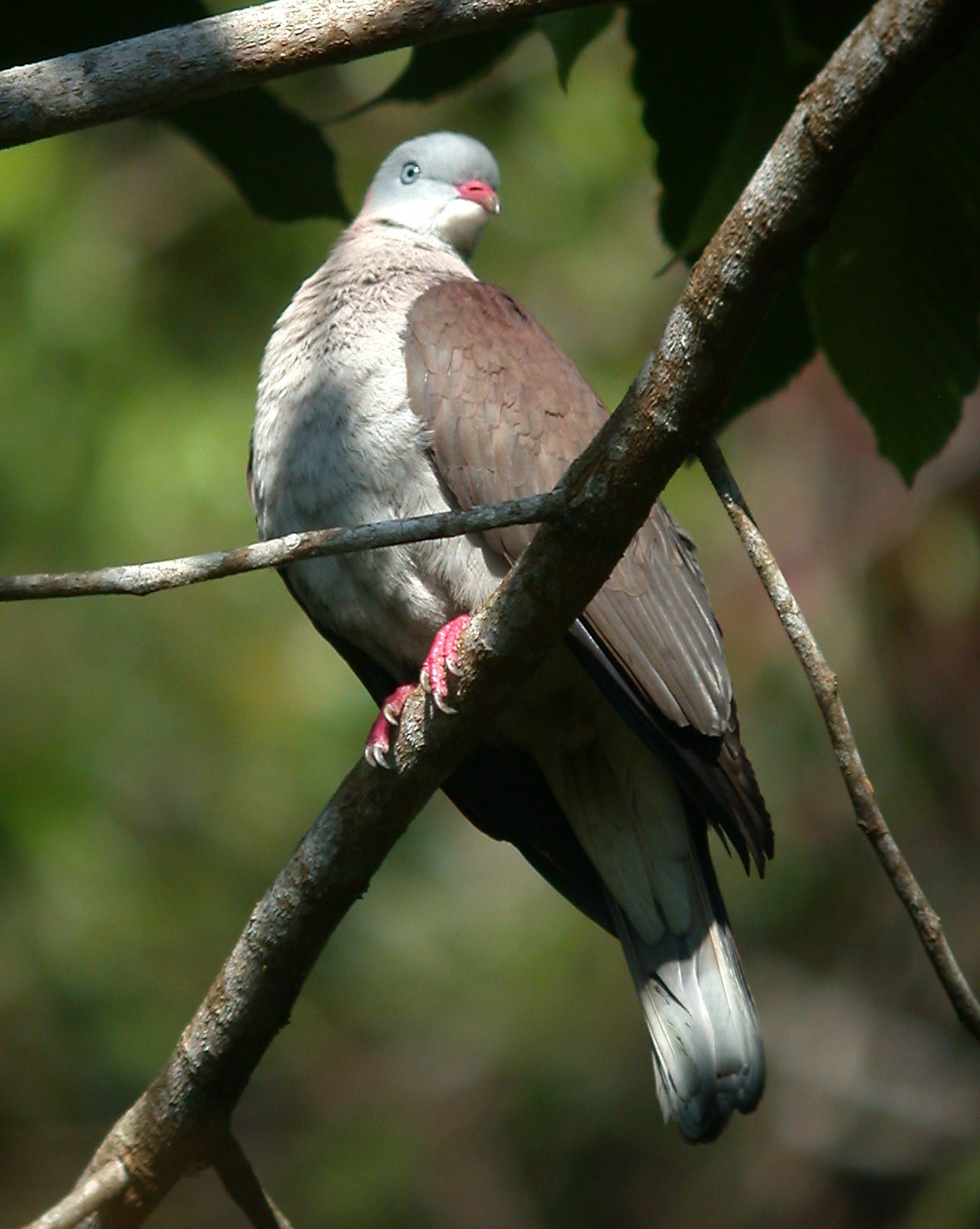
Photo: Len Worthington · CC BY-SA 2.0 (May be cropped or resized)
Ducula badia
Basic stats
Diet
Fruit and nectar
Habitat
Forest
Range
Bangladesh, Bhutan, India, Nepal, China and Southeast Asia
Clutch size
1, rarely 2 eggs
Size
43–51cm
The mountain imperial pigeon, also known as the maroon-backed or Hodgson's imperial pigeon, is the largest pigeon in its range, 43–51 cm long. It has a fairly long tail, broad rounded wings and slow wing beats. The head, neck and underparts are vinous grey with a contrasting white throat, the upperparts and wings brownish maroon, the underwing slate grey and the tail blackish with a grey horizontal line. Its call is a deep, resonant boom that is only audible at close range (Wikipedia, general species account).
It is usually solitary but has been seen in groups of up to 20, especially when going to roost. One, rarely two, eggs are laid and both parents incubate. In the breeding display, the bird flies vertically 6–8 m up from a perch and glides back down with wings and tail spread, and calling birds puff up their throats and bow to mates (Wikipedia, general species account).
Quick answers
- What does the Mountain Imperial Pigeon eat?
- Fruit and nectar
- What habitat does the Mountain Imperial Pigeon live in?
- Forest
- Where is the Mountain Imperial Pigeon found?
- Bangladesh, Bhutan, India, Nepal, China and Southeast Asia
- How many eggs does the Mountain Imperial Pigeon lay?
- 1, rarely 2 eggs
- How big is the Mountain Imperial Pigeon?
- 43–51cm