
 Wildlife
of Sumatra
White-Crowned Forktail
Old World Flycatchers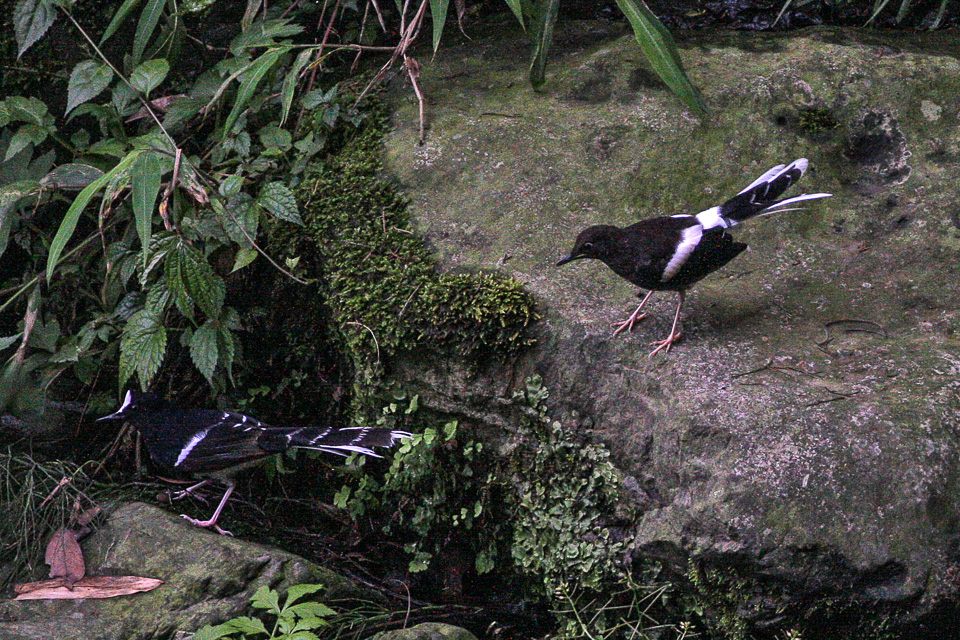
Photo: Ron Knight · CC BY 2.0 (May be cropped or resized)
Enicurus leschenaulti
Basic stats
Diet
Invertebrates, foraged along river and stream edges
Habitat
Near water; nest of plant material near the water
Range
China, Southeast Asia and north-eastern parts of the Indian subcontinent
Clutch size
2–5 eggs
Size
25–28cm
The white-crowned forktail is the largest of the forktails, 25–28 cm long, formally described in 1818 and with five subspecies, each occupying a different geographic range. It has a black throat and breast, a black mantle and largely black wings, a white rump and lower back and a prominent white crown that gives it its name; as with other forktails, the tail is long, deeply forked and banded black and white. It is found in China, Southeast Asia and north-eastern parts of the Indian subcontinent, common through most of its range (Wikipedia, general species account).
A shy bird, it stays near water and forages on the edges of rivers and streams for invertebrates, with a variety of whistling and clicking calls. The breeding season is between March and September, and nests are built near water of plant material. Clutches are two to five eggs, varying with latitude (Wikipedia, general species account).
Quick answers
- What does the White-Crowned Forktail eat?
- Invertebrates, foraged along river and stream edges
- What habitat does the White-Crowned Forktail live in?
- Near water; nest of plant material near the water
- Where is the White-Crowned Forktail found?
- China, Southeast Asia and north-eastern parts of the Indian subcontinent
- How many eggs does the White-Crowned Forktail lay?
- 2–5 eggs
- How big is the White-Crowned Forktail?
- 25–28cm